Rate of sale sets the order. Stock cover decides whether you can fill it.
Forecasting, stock cover, ordering, launch quantities and delivery-window performance, run on the same rails that ship your purchase orders. Retail DC-window orders are scheduled ahead of parcel work in every daily run, a commitment written into your contract before you pay anything. No forecast is right. Ours are wrong by a measured amount, reviewed monthly, with cover sized so the miss is survivable.
The problem
1 to 5%
of invoice value in chargebacks, deducted before you are paid
1 to 6 months
from a review win to the first purchase order, typically
90 days
of measured service data before we publish any of it
A ranging is won in the review and kept in the arithmetic that follows it. Rate of sale, the units each store sells per week, sets what the retailer orders. Stock cover, the weeks of demand your inventory can serve, sets whether you can fill it. Get either wrong and the shelf punishes you in opposite directions: out of stocks hand your facing to a competitor at the next review, and overstock ties your cash up in cartons.
The full picture
The penalties are specific. Chargebacks commonly run 1 to 5 percent of invoice value when compliance fails, and they are deducted before you are paid, not invoiced afterwards. A missed delivery window is not rescheduled on your terms; the DC sets the next one. And the launch quantity is the hardest number in the whole sequence, because the first purchase order typically lands one to six months after a review win, so production is committed while the rate of sale is still a guess.
Most DTC brands run this on a spreadsheet and a feeling, because until retail arrived, a stockout meant a sold-out banner, not a deduction. Retail keeps score differently. This service exists to run that score deliberately.
Who this is for
- Founder-led consumer brands doing roughly 100 to 1,000 orders a month, adding retail purchase orders to a DTC operation that was never built for them
- Brands in the First PO Program approaching a first purchase order, with a launch production run to commit before any sales history exists
- Ranged brands carrying chargebacks, out of stocks, or a stock pile that says the last forecast was hope
- Food, beverage and supplement brands first; the Melbourne warehouse runs food under HACCP. Beauty is case by case, with our register of interests on the table before anything else
What we do
- 01
Build a demand forecast per SKU from your actual rate of sale, using retailer scan data where it is provided and your DTC history where it is not
- 02
Set stock cover targets per SKU, sized to your production lead times and the retailer's order cadence, so a normal forecast miss does not empty a shelf or a bank account
- 03
Model launch quantities for new rangings from comparable products, store counts and pipeline fill, so the first production run is a decision with a downside you chose, not a guess
- 04
Layer promotional uplift into the forecast before the promotion is agreed, so promoted volume is stock you hold, not a short delivery
- 05
Manage the ordering itself: purchase orders confirmed over EDI, the electronic ordering pipe; ASNs, advance shipping notices, sent before every delivery; pallets built to GS1 and retailer spec
- 06
Schedule every retail order into its DC delivery window, ahead of parcel work in every daily run, a commitment written into your contract
- 07
Review forecast accuracy against actuals every month and adjust cover where the error says to, with every chargeback investigated to root cause
- 08
Report to you in the retailer's own terms: rate of sale, weeks of cover, and DIFOT, delivered in full and on time, per purchase order
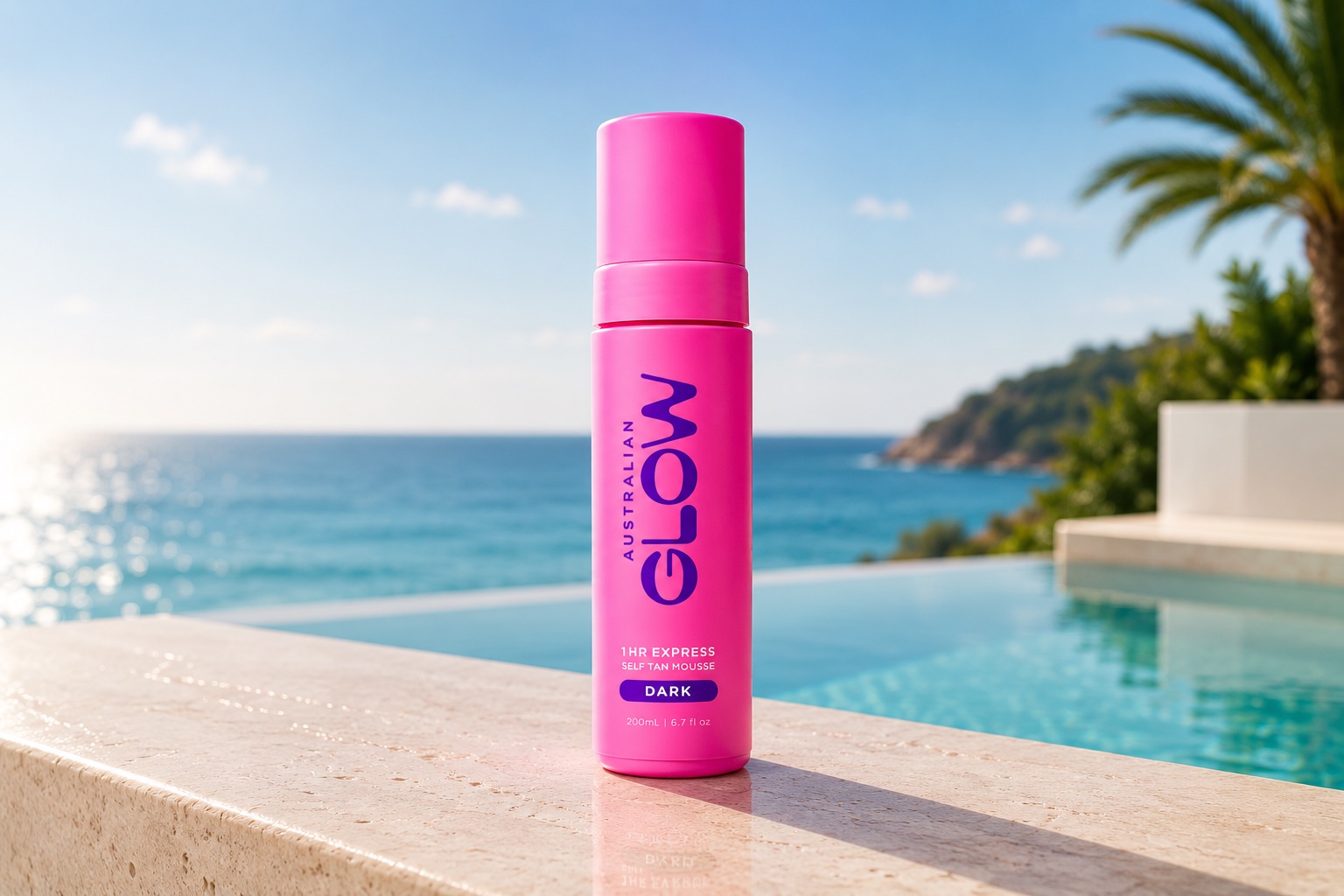
Australian Glow, the founder's brand. Campaign imagery.
On shelf is the start. Sell-through is the job.
Deliverables
- Demand forecast per SKU, refreshed monthly or to the retailer's order cadence, whichever is tighter
- Stock cover targets and reorder points per SKU, tied to your production lead times
- Launch quantity model for each new ranging, with the downside of over and under committing costed side by side
- Order and delivery-window calendar covering every open purchase order
- Monthly review, in writing: forecast against actuals, cover position, chargeback register with root causes
- Compliance record per delivery: ASN sent, window met, pallet spec confirmed
How it is bought
$4,000 a month to be represented
- Part of the ongoing partnership, the Retail Reordered stage of the system.
- Included in the representation retainer, with onboarding and fulfilment set-up covered.
- Melbourne warehouse fulfilment is on one rate schedule, fixed on your scope sheet, with an audit right in your contract.
- Freight is carrier cost plus a disclosed 5 percent.
If a number is not on the pricing page or your scope sheet, you do not pay it.
The full terms, in prose
Forecasting and Supply is part of the ongoing partnership, the Retail Reordered stage of the system. It is covered by the $4,000 monthly representation retainer, which includes all onboarding and set-up for fulfilment, fixed on your scope sheet before you sign. Fulfilment from our Melbourne warehouse is on one rate schedule, fixed on your scope sheet before you sign, with an audit right in your contract. Freight is carrier cost plus a disclosed 5 percent. If a number is not on the pricing page or your scope sheet, you do not pay it.
The process
- 01
Baseline
We take your sales history, current stock position, production lead times, minimum order quantities and the retailer's order pattern, and compute your actual rate of sale per SKU. Most brands have never seen this number cleanly; it drives everything after it.
- 02
Set the cover
Stock cover targets per SKU, sized to how long your next production run takes and how often the retailer orders. Cover is the buffer that absorbs forecast error. Too little and you short a PO; too much and the buffer is your cash.
- 03
Build the forecast
Base demand from rate of sale, plus promotional uplift agreed with you before it drives a single order. For new rangings, the launch quantity model runs here, before production is committed.
- 04
Order and schedule
Purchase orders confirmed over EDI, ASNs before every delivery, pallets to spec, and every order scheduled into its DC window ahead of parcel work in the daily run, a commitment written into your contract.
- 05
Measure and adjust
Every month: forecast against actuals, cover repositioned where the error says to, chargebacks traced to root cause and closed. We publish measured service data when ninety days of it exists, and not one day before.
Questions founders ask
Can you guarantee I never go out of stock?
No, and be careful of anyone who says yes. Every forecast is wrong; the working questions are by how much, in which direction, and whether your stock cover absorbs it. We measure the error monthly and size cover so a normal miss does not empty a shelf. On service performance, we publish measured data when ninety days of it exists, and not before.
The retailer already sends me a forecast. Why build my own?
Keep theirs, genuinely. It is a useful input and we take it as one. But the retailer's forecast exists to protect the retailer's shelf. It does not know your production lead times, your minimum order quantities, your ingredient shelf life or your cash position, and it carries no cost when it is wrong. You carry that. Your forecast reconciles their demand signal with what your business can actually produce and afford.
How do you set a launch quantity when there is no sales history?
From comparables: the rate of sale of products like yours in the category, the store count on the new-line form, and the retailer's pipeline fill. Then we cost both failure modes side by side, because dead stock and a shorted first PO are both expensive, just on different lines. The first purchase order typically lands one to six months after a review win, which is production time you plan with, not against. The buyer decides the ranging. The model decides how much you make.
What do chargebacks actually cost?
Commonly 1 to 5 percent of invoice value when compliance fails: a missed window, a short delivery, a wrong pallet, a missing ASN. They come off your invoice before you are paid, so they land straight on your margin. The economical fix is not disputing them, it is not incurring them, which is why the ASN, the pallet spec and the window scheduling sit inside this service rather than beside it.
The next step
Bring your sales history and production lead times to a scoping call. We will tell you what the forecast would cover for your brand, and what it costs, before you sign anything. Use the form below.
Scope the forecastThe form is at the bottom of this page and lands straight in our inbox.
Ready to find out whether your brand is built for retail?
Start with a focused conversation about your category, commercial model and target retailers. We will tell you what is ready, what is missing and whether we are the right partner.
No generic sales pitch. A practical first conversation about your retail opportunity, and a reply within two business days.