The buyer reads your pack before your pitch.
Labelling, barcodes and retail-ready formats, audited against the Food Standards Code and your target retailer's pack guide, then fixed: artwork managed, barcodes verified, cartons marked, and the print transition timed so you are not binning stock. Compliance is not decoration. It is the first test your product sits.
The problem
A pack that sells beautifully on your website can be unrangeable in a supermarket. The Food Standards Code governs what a food label must carry: the ingredient list, plain English allergen declarations, the nutrition information panel, date marking, lot identification, your name and address, and country-of-origin marking under its own information standard. Trade measurement rules govern how the quantity is declared. None of this is optional, and buyers know it before you do.
The full picture
Then the retailer adds its own layer: barcode print grades that actually scan at the DC, case configurations, carton markings, and for grocery, shelf-ready packaging specs that decide whether your product can even be worked onto the shelf. A pack that fails at the distribution centre earns chargebacks; a label that fails the Code can earn a recall. Both are cheaper to prevent than to survive.
Most founders discover these gaps after a buyer meeting goes well, when the clock is already running on a review window. The fix is unglamorous: audit the pack early, cost every gap, update the artwork once, and time the print run so existing stock runs out instead of being written off.
Who this is for
- DTC brands whose packaging was designed for a website and a satchel, not a shelf and a distribution centre.
- International brands entering Australia with offshore labelling that has never met the Food Standards Code or Australian country-of-origin marking.
- Brands already ranged and wearing chargebacks from barcode or carton failures they have not diagnosed.
- Food, beverage and supplement brands first. Beauty packs are reviewed case by case; labelling for therapeutic goods is scoped with the specialist regulatory consultants that territory requires.
What we do
- 01
Audit every pack against the Food Standards Code labelling requirements: ingredients, allergen declarations, nutrition information panel, date marking, lot identification, name and address.
- 02
Check country-of-origin marking against the information standard, including the bar-chart mark food sold in Australia is expected to carry.
- 03
Check quantity statements against trade measurement rules, so the declared weight or volume is marked the way the regulator expects.
- 04
Verify GS1 barcodes properly: correct numbering, correct symbology, print grades that scan first time at a DC, ITF-14 on the shipper.
- 05
Build the retail-ready packaging spec for grocery: the tray, the facing, the tear line, tested against your retailer's pack guide.
- 06
Manage the artwork round with your designer, or supply ours: compliance fixed without flattening the brand your customers already buy.
- 07
Time the print transition: run-out dates for existing stock, so compliance does not cost you a warehouse of written-off packaging.
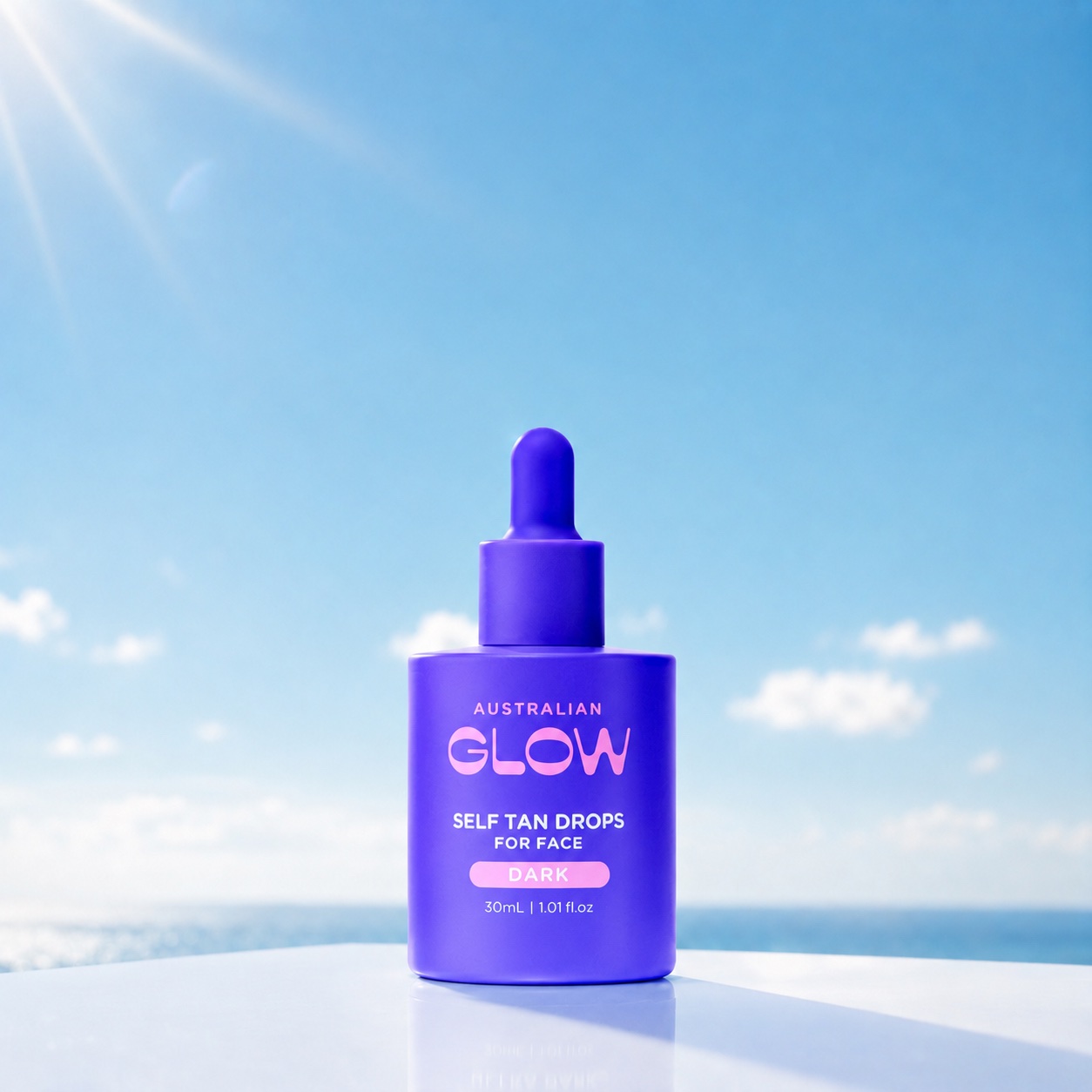
Australian Glow, the founder's brand. Campaign imagery.
The numbers first. Then the shelf.
Deliverables
- A pack-by-pack gap register: every issue, its regulation or retailer rule, the cost to fix, the lead time.
- Corrected print-ready artwork files, approved by you, with the compliance changes documented line by line.
- A barcode verification report for every trade unit and shipper.
- The shelf-ready packaging spec, where your retailer requires one.
- Carton marking and case configuration specs matched to your retailer's guide.
- A print transition plan with run-out dates, so old stock sells through before new packs land.
How it is bought
A fixed fee on your scope sheet, priced by SKU count and complexity
- Packaging work starts inside the Retail-Readiness Sprint: the compliance gap list it delivers is the audit.
- Execution covers artwork management, verification and the transition plan.
- Where a question needs a food-labelling lawyer or a therapeutic goods specialist, we say so and bring one in rather than guessing.
If a number is not on the pricing page or your scope sheet, you do not pay it.
The full terms, in prose
Packaging work starts inside the Retail-Readiness Sprint: the compliance gap list it delivers is the audit. Execution, artwork management, verification and the transition plan, is scoped as a fixed fee on your scope sheet, priced by SKU count and complexity before you sign. If a number is not on the pricing page or your scope sheet, you do not pay it. One honest boundary: we manage compliance to the Code and your retailer's guide, and where a question needs a food-labelling lawyer or a therapeutic goods specialist, we say so and bring one in rather than guessing.
The process
- 01
The pack audit
Every SKU, current artwork and physical pack, checked against the Food Standards Code, country-of-origin and trade measurement rules, and your target retailer's pack guide.
- 02
The gap register
Every issue with its rule, its fix, its cost and its lead time. You see the whole bill before any artwork moves. Sometimes the register is short and the news is good.
- 03
The artwork round
One managed round with your designer or ours. Compliance changes only, documented line by line, unless you ask for more. Your brand equity is not ours to redesign.
- 04
Verification
Barcodes graded, proofs checked against the register, retail-ready spec tested with the physical carton. Nothing goes to print on a maybe.
- 05
The transition plan
Print quantities and run-out dates set against your sales rate, so existing stock exits through the till instead of the bin.
Questions founders ask
Can't my designer just handle this?
Your designer can execute it; the question is who specifies it. The Food Standards Code, country-of-origin marking and trade measurement rules are regulatory documents, and retailer pack guides add another layer a brand designer has no reason to know. We write the specification and manage the round; your designer keeps the brand. The expensive version of this is finding out at the DC, where a barcode that will not scan or a tray that will not shelf earns chargebacks measured in percent of invoice.
What does a non-compliant pack actually cost?
Three ways, in rising order. Chargebacks when cartons or barcodes fail at the distribution centre, commonly cited in the low single-digit percentages of invoice value. A failed range review, because buyers check the pack before they check the pitch. And at the far end, a recall or regulator action on a labelling breach, which costs more than every audit you will ever buy. Prevention is the cheap column.
Will you redesign our brand?
Not on this service. Compliance changes what the Code, the origin standard, trade measurement and your retailer require, documents every alteration, and leaves the brand your customers recognise alone. If you do want a redesign or a rebrand, that is our Branding and Packaging service, a separate scope you choose rather than one we fold in here.
We sell supplements. Does this cover us?
Partly, and we are straight about the boundary. General food and beverage labelling sits inside our scope. Listed complementary medicines are therapeutic goods with their own labelling regime, and that work is scoped with the specialist regulatory consultants it requires. We coordinate it; we do not improvise it.
The next step
Send your current pack artwork and your target retailer, and the audit tells you exactly what stands between your pack and their shelf.
Send your pack artworkThe form is at the bottom of this page and lands straight in our inbox.
Ready to find out whether your brand is built for retail?
Start with a focused conversation about your category, commercial model and target retailers. We will tell you what is ready, what is missing and whether we are the right partner.
No generic sales pitch. A practical first conversation about your retail opportunity, and a reply within two business days.